


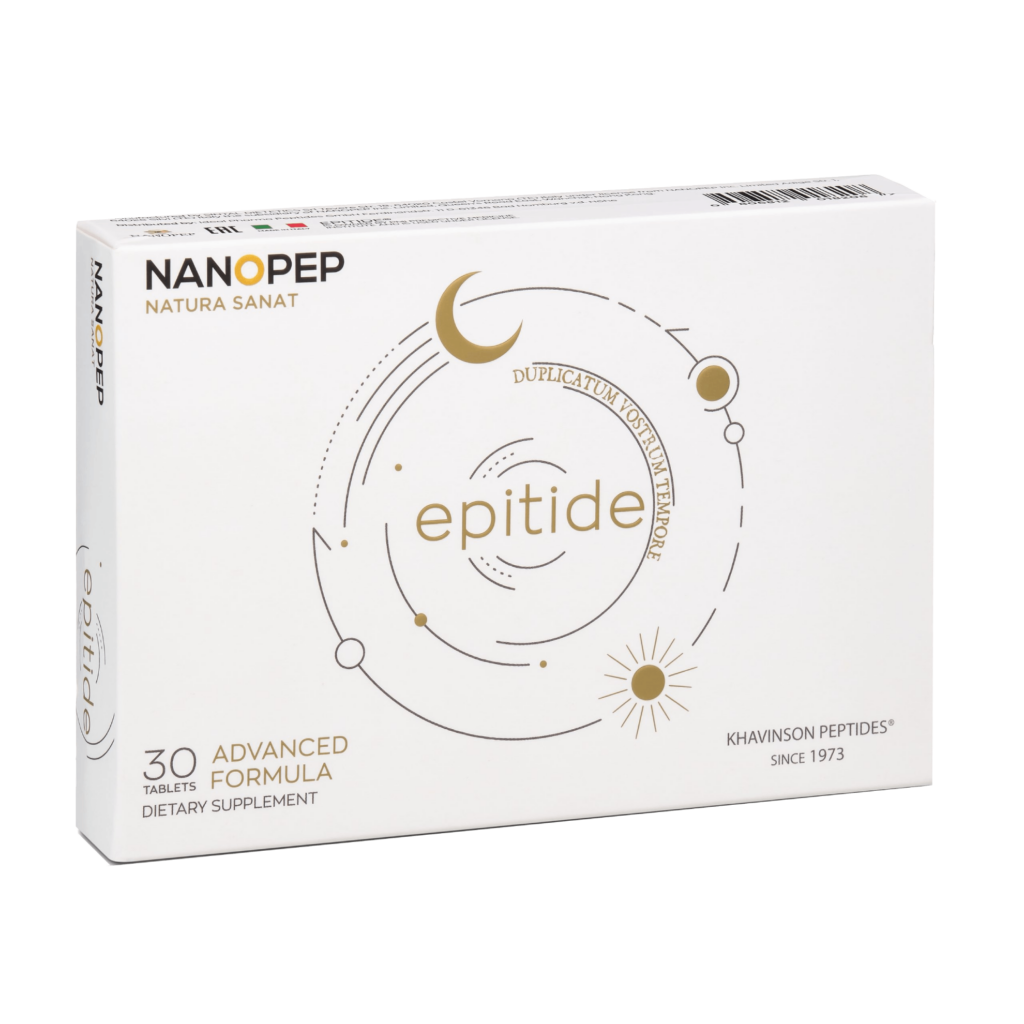
Interest in peptide science has grown rapidly in recent years as researchers continue exploring the biological molecules that help coordinate cellular communication throughout the body. Among the many areas receiving attention is the pineal gland, a small endocrine organ that plays a central role in regulating circadian rhythms, melatonin production, and other neuroendocrine functions associated with healthy aging.
Nanopep Epitide® is a peptide-based supplement developed to draw upon decades of scientific interest surrounding Epithalamin, a naturally derived peptide complex historically studied for its relationship to pineal gland biology. Although much of this research originated in Russia during the late twentieth century, it has contributed to ongoing discussions about peptide bioregulators, tissue-specific signaling, and the biological processes involved in aging.
Unlike many online discussions that focus exclusively on Epitalon—a synthetic tetrapeptide known chemically as AEDG—Nanopep Epitide™ is inspired by the broader scientific literature surrounding Epithalamin, a naturally derived complex of pineal peptides that served as the foundation for much of the original research. Understanding this distinction is important because Epithalamin and Epitalon represent different scientific concepts, despite often being discussed interchangeably.
This Scientific Hub summarizes the current evidence surrounding Epithalamin-related pineal peptides, explains the biological role of the pineal gland, reviews historical peptide bioregulator research, and places Nanopep Epitide™ within the broader context of healthy aging science. Our goal is to provide balanced, evidence-based information that helps you understand how you can incorporate Nanopep Epitide™ into a healthy aging routine.
What Is Nanopep Epitide®?
A Modern Product Inspired by Historical Peptide Research
Nanopep Epitide® is a peptide-based formulation developed around scientific interest in Epithalamin-related pineal peptides. Rather than focusing exclusively on synthetic peptide analogues, Epitide is intended to reflect decades of investigation into naturally occurring peptide complexes associated with the pineal gland and their potential biological significance.
To understand Epitide®, it is helpful to begin with the broader field of peptide bioregulators.
Peptides are short chains of amino acids that participate in countless biological processes. Many function as signaling molecules, allowing cells and tissues to communicate with remarkable specificity. Some regulate hormone production, while others influence immune responses, tissue repair, cellular metabolism, or circadian rhythms.
The concept of peptide bioregulators proposes that certain naturally occurring peptides may help maintain normal tissue function by supporting cellular communication and gene regulatory processes. Although many aspects of this theory remain under investigation, it has generated sustained scientific interest because it offers a potential framework for understanding how aging tissues maintain—or gradually lose—their functional capacity.
Within this field, the pineal gland has occupied a unique position because of its central role in coordinating daily biological rhythms and endocrine signaling.
The Origins of Epithalamin
Epithalamin was originally developed as a peptide preparation derived from bovine pineal tissue. It consists of a complex mixture of naturally occurring low-molecular-weight peptides rather than a single chemically defined compound.
Beginning in the 1970s and continuing through the following decades, researchers investigated Epithalamin as part of a broader effort to understand peptide regulation of aging-related biological processes. Professor Vladimir Khavinson and colleagues led much of this work, whose studies examined whether tissue-derived peptide complexes might influence cellular function, neuroendocrine regulation, and physiological resilience. That’s why certain peptide supplements are known as Vladimir Khavinson peptides.
Peptide bioregulator research sought to identify naturally occurring tissue peptides that could potentially interact with cells from the same organ system. This concept—sometimes described as tissue-specific peptide regulation—remains an active topic of scientific discussion, although many proposed mechanisms have yet to be fully established using contemporary molecular biology techniques.
Where Does Epitide® Fit?
Nanopep Epitide® draws conceptual inspiration from this historical body of research while presenting it in a format intended for today’s scientifically informed consumers.
Importantly, Epitide should not be confused with Epitalon, a synthetic peptide consisting of the amino acid sequence Ala-Glu-Asp-Gly (AEDG). Although Epitalon was designed based on observations arising from Epithalamin research, the two are chemically distinct and have followed different scientific trajectories.
This distinction matters because much of the online information about “Epitalon” discusses Epithalamin and Epitalon interchangeably. Understanding which molecule—or peptide complex—is being evaluated is essential when interpreting scientific evidence.
Why Scientists Became Interested in Pineal Peptides
Interest in pineal peptides emerged from several observations regarding aging biology.
The pineal gland undergoes structural and functional changes throughout life. Melatonin production, which occurs in the pineal gland, generally declines with age, circadian rhythms often become less robust, and communication between the brain and endocrine system may gradually lose precision.
Researchers wondered whether naturally occurring peptides from healthy pineal tissue might contribute to maintaining these regulatory processes.
This hypothesis led to investigations exploring whether peptide preparations such as Epithalamin could influence biological pathways associated with:
- circadian rhythm regulation
- neuroendocrine signaling
- oxidative stress
- immune system communication
- cellular adaptation
- healthy aging
Although these questions remain under active investigation, they helped establish pineal peptide research as one of the earliest scientific efforts to explore biological regulation beyond traditional hormone replacement.
Getting to Know the Pineal Gland
The Body’s Internal Timekeeper
Despite measuring only about the size of a grain of rice, the pineal gland performs one of the body’s most important coordinating functions.
Located near the center of the brain between the two cerebral hemispheres, the pineal gland is part of the endocrine system and serves as the primary source of melatonin, a hormone that communicates information about the light-dark cycle to nearly every organ in the body.
Rather than functioning as a simple sleep hormone, melatonin acts as a biological timing signal. Its production increases in darkness and decreases during daylight, helping synchronize internal physiological rhythms with the external environment.
This daily rhythm influences:
- sleep timing
- body temperature
- hormone secretion
- metabolic activity
- immune function
- cellular repair processes
- seasonal physiological adaptations
For this reason, the pineal gland is often described as the body’s biological clock, although the process is more accurately understood as a complex network involving the brain’s suprachiasmatic nucleus, retinal light perception, and endocrine signaling.
How the Pineal Gland Produces Melatonin
Melatonin synthesis begins with the amino acid tryptophan, which is converted into serotonin before undergoing additional enzymatic reactions inside pineal cells.
Exposure to darkness activates neural pathways connecting the retina, hypothalamus, and pineal gland, increasing the activity of enzymes responsible for melatonin production. As daylight returns, these signals diminish and melatonin secretion falls.
This daily cycle repeats throughout life, allowing the body to anticipate predictable environmental changes rather than merely responding to them after they occur.
Because melatonin receptors are distributed throughout numerous tissues—including the brain, cardiovascular system, immune cells, gastrointestinal tract, and reproductive organs—the influence of pineal signaling extends well beyond sleep regulation.
Circadian Rhythms and Whole-Body Physiology
Circadian rhythms are approximately 24-hour biological cycles that regulate thousands of physiological processes.
These rhythms affect:
- gene expression
- hormone release
- immune surveillance
- mitochondrial function
- glucose metabolism
- cardiovascular activity
- cognitive performance
- tissue repair
Maintaining strong circadian synchronization has become an increasingly important area of healthy aging research because disruptions in biological timing are associated with changes in sleep quality, metabolic regulation, and overall physiological resilience.
Scientists now recognize that nearly every organ contains its own molecular clock, with the pineal gland and central nervous system helping coordinate these individual rhythms into an integrated biological system.
This systems-level perspective has helped explain why researchers became interested in peptide regulators originating from the pineal gland.
How Aging Affects the Pineal Gland
Like many organs, the pineal gland changes over time.
Research has observed age-related alterations that may include:
- reduced nocturnal melatonin production
- increased calcification of pineal tissue
- changes in circadian rhythm amplitude
- altered neuroendocrine signaling
- decreased responsiveness to environmental light cues
These observations have prompted ongoing investigations into whether supporting healthy circadian biology may contribute to overall healthy aging.
Importantly, however, age-related changes in pineal physiology are only one component of the complex biological processes associated with aging. Nutrition, physical activity, genetics, environmental exposures, and overall health all interact to influence how individuals age.
For this reason, contemporary longevity research increasingly emphasizes integrated approaches that support multiple biological systems rather than focusing on any single pathway.
Why the Pineal Gland Matters in Healthy Aging
Increasingly, researchers define healthy aging as preserving physiological function, resilience, and adaptability across the lifespan.
The pineal gland contributes to this broader picture because it helps coordinate many of the body’s internal timing systems. Stable circadian rhythms are associated with more consistent hormonal signaling, efficient energy metabolism, restorative sleep, and synchronized cellular activity—all processes that become increasingly important with advancing age.
This does not mean that maintaining pineal function alone determines longevity. Rather, it highlights the pineal gland as one component of an interconnected network linking the nervous system, endocrine system, metabolism, immune regulation, and environmental adaptation.
It was within this scientific framework that researchers first began investigating Epithalamin-related pineal peptides. Their goal was to better understand how naturally occurring peptide signals might participate in maintaining tissue homeostasis during aging.
Over the following decades, these investigations gave rise to one of the most distinctive areas of peptide bioregulator research—a history that will be explored in the next section of this Scientific Hub.
Epithalamin, Peptide Bioregulators, and the Scientific Foundation of Pineal Peptide Research
Epithalamin: The Origins of Pineal Peptide Research
Interest in peptide bioregulators began long before the modern longevity movement. Decades before the term “biohacking” entered popular vocabulary, scientists were investigating whether naturally occurring peptides derived from healthy tissues could influence cellular function and support the maintenance of organ-specific physiology.
Among the earliest and most extensively studied preparations was Epithalamin, a naturally derived peptide complex isolated from the pineal glands of young cattle. Beginning in the 1970s, researchers in the former Soviet Union initiated a long-running research program to investigate its biological activity, with a particular focus on aging, neuroendocrine regulation, and tissue homeostasis.
Much of this work was led by Professor Vladimir Khavinson, whose laboratory became internationally recognized for developing the concept of peptide bioregulators. While many aspects of this research remain unfamiliar to Western audiences, it represents one of the largest bodies of scientific literature devoted to tissue-specific peptide regulation.
Understanding this historical context helps explain why Epithalamin continues to attract interest among researchers and longevity enthusiasts today.
What Is Epithalamin?
Epithalamin is not a single peptide. Instead, it is a naturally derived complex composed of numerous low-molecular-weight peptides extracted from pineal tissue.
This distinction is important.
Unlike synthetic peptides manufactured with a defined amino acid sequence, naturally derived peptide complexes contain many different biologically active fragments. Their exact composition may vary depending on extraction methods and source material, making them fundamentally different from chemically synthesized molecules such as Epitalon.
Researchers originally became interested in Epithalamin because they hypothesized that naturally occurring tissue peptides might act as biological regulators, helping maintain normal cellular communication within the same organ system from which they were derived.
Although this hypothesis remains an active area of investigation, it formed the basis for decades of experimental work involving peptide bioregulators.
The Birth of Peptide Bioregulator Science
The concept of peptide bioregulation emerged from observations that very small peptide fragments appeared capable of influencing cellular behavior in laboratory models.
Rather than functioning like hormones—which circulate broadly throughout the body—these peptides were proposed to act locally, interacting with cells in ways that helped preserve normal physiological function.
Researchers suggested that tissue-derived peptides might:
- influence cellular communication
- support normal protein synthesis
- participate in gene regulation
- help maintain tissue-specific differentiation
- promote adaptive responses to physiological stress
Over time, this concept expanded into a broader theory suggesting that aging might involve progressive declines in endogenous peptide signaling, reducing the ability of tissues to maintain homeostasis.
Although intriguing, these proposed mechanisms remain only partially understood and continue to be investigated using modern molecular biology techniques.
Professor Vladimir Khavinson and the Development of Peptide Bioregulators
Few scientists have had as much influence on peptide bioregulator research as Professor Vladimir Khavinson.
Beginning in the 1970s, Khavinson and colleagues at the St. Petersburg Institute of Bioregulation and Gerontology developed peptide preparations derived from multiple tissues, including:
- pineal gland
- thymus
- blood vessels
- liver
- cartilage
- brain
- prostate
- retina
Each preparation was intended to investigate whether tissue-specific peptides could selectively influence the corresponding organ system.
Among these preparations, Epithalamin became one of the most extensively studied because of the pineal gland’s central role in regulating circadian biology and neuroendocrine function.
Khavinson’s research program eventually produced hundreds of scientific publications examining peptide bioregulators in laboratory, animal, and human settings. While many studies appeared in Russian-language journals that were not widely disseminated internationally, they collectively established one of the largest historical research programs focused on peptide-mediated regulation of aging biology.
Why the Pineal Gland Became the Focus
The pineal gland occupies a unique position within the endocrine system.
Unlike most endocrine organs, it receives direct information about environmental light exposure through specialized neural pathways.
This allows it to synchronize biological timing throughout the body.
Researchers recognized that many physiological systems associated with aging—including sleep, immune regulation, metabolism, and hormone production—are influenced by circadian rhythms.
Consequently, the pineal gland became an attractive target for investigating tissue-derived peptides.
Human Research on Epithalamin
Epithalamin and Melatonin Research
One of the earliest areas of investigation examined whether Epithalamin supported healthy melatonin production. A study by Khavinson and colleagues found that Epithalamin restored melatonin levels in humans and animals during aging.1
Another study by Khavinson and associates noted the plasma melatonin concentrations in healthy elderly subjects before and after administration with Epithalamin.2 The study found that Epithalamin maintained melatonin production in the pineal gland.
These findings generated considerable interest because melatonin serves multiple biological roles beyond regulating sleep.
Melatonin participates in:
- circadian rhythm
- antioxidant defense
- mitochondrial biology
- immune signaling
Epithalamin and Healthy Aging Research
The possibility that peptide bioregulators might influence healthy aging became one of the defining themes of Khavinson’s research. A study by Khavinson published in 2003 investigated the use of thymic (Thymalin) and pineal (Epithalamin) peptide bioregulators in 266 elderly people over six to eight years.3 The bioregulators were used for the first two to three years of observation.
The study found that the bioregulators normalized the basic functions of the human organism. They maintained cardiovascular, endocrine, immune system, and nervous system health and supported a healthy metabolism and lifespan.
These findings have contributed to ongoing scientific interest.
Epithalamin and Heart Health
Khavinson and colleagues published several studies that looked into Epithalamin’s supportive effects on the heart. In one of those studies, over three years, 39 elderly people in need of coronary support were given basic therapy plus regular courses of Epithalamin or basic therapy alone.4 Long-term use of Epithalamin (6 courses over three years) supported healthy cardiovascular aging as well as physical endurance, circadian rhythm of melatonin production, and carbohydrate and lipid metabolism.
In other research, Khavinson and colleagues over 12 years conducted a clinical study of Epithalamin’s effects on the heart in elderly people.5 In this study, Epithalamin supported cardiovascular health, maintained exercise tolerance, and supported a healthy lifespan.
Earlier research by Khavinson and associates found that Epithalamin administration in 33 humans was involved in healthy carbohydrate and insulin metabolism, glycosylated hemoglobin support, and cardiovascular health.6
In another study by other researchers, Epithalamin supported arterial health in middle-aged and elderly women.7
Other Human Research on Epithalamin
Scientists also have studied Epithalamin for its potential to:
- Support brain function in humans.8
- Maintain antioxidant defenses in humans and animals, creating a healthy balance between prooxidation and antioxidant systems.9
- Maintain retinal function and blood flow along with supporting healthy blood sugar metabolism and glycosylated hemoglobin.10
Animal and Preclinical Research on Epithalamin
Healthy Aging and Melatonin
Research into epithalamin has explored its potential role in several processes associated with healthy aging, including melatonin production and antioxidant defense. Animal studies suggest that epithalamin may help maintain melatonin levels and support cellular responses associated with healthy longevity.
For example, fruit flies, mice, and rats lived longer after epithalamin administration.11 It supported healthy antioxidant responses and melatonin production in fruit flies and rats. The study indicated that antioxidant and melatonin support may be a mechanism by which it may promote healthy aging.
In another study, researchers investigated the ability of epithalamin to convert serotonin to melatonin.12 Old rats (18 to 20 month old) have a reduced ability to convert serotonin into melatonin compared with younger (4-5-month old) rats. Injections with epithalamin increased the metabolism of serotonin into melatonin in the old animals.
In fruit flies, epithalamin promoted antioxidant enzymes and maintained a healthy lifespan.13
Antioxidant Effects
One of the ways in which epithalamin is involved in healthy aging is through triggering an antioxidant response. Studies in animals suggest that epithalamin may help strengthen endogenous antioxidant defenses and protect cells.
For example, in rats exposed to low-oxygen conditions (hypoxia), epithalamin was more effective than exogenous melatonin at defending hippocampal neurons against hypoxia by having antioxidant effects that protected lipids and proteins.14 In the fruit flies, mice, and rats study mentioned earlier, epithalamin supported healthy antioxidant responses.11
Immunity and Reproductive Research
Researchers have also investigated epithalamin’s effects on biological systems that can undergo age-related changes, including the immune and reproductive systems. Epithalamin maintained spleen health in aging rats.15 It also had beneficial effects on the thymus gland, even more so than thymic peptides.16 The thymus gland plays an important role in immunity through its ability to train white blood cells (T-cells).
Other research shows that epithalamin keeps the aging reproductive system healthy in mice and rats.13 It also has supported sperm health in rats.17
Brain Health Studies
The nervous system is another area in which researchers have examined the potential effects of epithalamin. Preliminary evidence from cell and animal studies suggests that epithalamin may support neuronal health and help protect brain cells under conditions of physiological stress. Cell culture evidence in chick embryos shows that epithalamin can support the health of brain neurons by stimulating neurite outgrowth.18 As noted under the antioxidant section, epithalamin also defended hippocampal neurons against hypoxia in the brains of rats.
From Epithalamin to Modern Peptide Research
The historical investigation of Epithalamin laid the groundwork for subsequent research into synthetic peptide analogues, including Epitalon (AEDG).
Although these two substances are frequently discussed together, they represent distinct scientific approaches:
- Epithalamin is a naturally derived peptide complex containing multiple biologically active fragments.
- Epitalon is a chemically synthesized tetrapeptide designed to reproduce selected characteristics associated with Epithalamin research.
Understanding this distinction is essential for accurately interpreting the scientific literature. In the next section, we will examine how Epitalon differs from Epithalamin, where Nanopep Epitide fits within this landscape, and what current evidence suggests about each approach to pineal peptide research.
Epithalamin vs. Epitalon: Understanding the Difference
Although Epithalamin and Epitalon are often used interchangeably online, they refer to different substances with distinct scientific histories.
Understanding the difference is essential for accurately interpreting the available research and evaluating products marketed within the longevity and peptide space.
Epithalamin: A Naturally Derived Peptide Complex
Epithalamin was originally developed as a tissue-derived peptide preparation extracted from bovine pineal glands. Rather than consisting of a single molecule, it contains a mixture of naturally occurring low-molecular-weight peptides.
Historically, researchers investigated Epithalamin as a biological regulator of pineal function and healthy aging. Because it contains multiple peptide fragments, researchers believed its biological activity may result from the combined action of numerous naturally occurring signaling molecules.
This complexity also makes Epithalamin difficult to characterize using modern pharmaceutical standards, as the exact composition may vary depending on source material and manufacturing methods.
Epitalon: A Synthetic Tetrapeptide
Epitalon (also known as AEDG) was developed later as a synthetic peptide analogue inspired by earlier Epithalamin research.
Unlike Epithalamin, Epitalon consists of a single, chemically defined sequence of four amino acids:
Alanine – Glutamic acid – Aspartic acid – Glycine (AEDG)
Researchers hoped that this simpler molecule might reproduce selected biological properties associated with Epithalamin while offering greater consistency and reproducibility.
Today, most contemporary longevity discussions surrounding “Epitalon” focus on this synthetic tetrapeptide rather than the original tissue-derived peptide complex.
Quick Comparison
| Feature | Epithalamin | Epitalon (AEDG) |
|---|---|---|
| Origin | Naturally derived from pineal tissue | Chemically synthesized |
| Composition | Multiple naturally occurring peptides | Single tetrapeptide |
| Molecular definition | Complex peptide mixture | Precisely defined molecule |
| Historical development | 1970s Soviet peptide research | Developed as a synthetic analogue |
| Primary research focus | Pineal peptide bioregulation | Synthetic peptide biology |
Although closely related historically, findings from one preparation should not automatically be assumed to apply to the other.
Why Pineal Peptides Continue to Interest Researchers
The pineal gland influences numerous physiological systems through its role in circadian regulation.
Scientists continue investigating how age-related changes in pineal function may affect:
- sleep-wake cycles
- endocrine signaling
- immune coordination
- oxidative balance
- mitochondrial function
- metabolic regulation
- cognitive health
Because peptides naturally participate in cellular communication, researchers remain interested in understanding whether pineal-derived peptides contribute to maintaining these regulatory networks.
Although many questions remain unanswered, advances in molecular biology, proteomics, and gene regulation research are providing new tools for investigating hypotheses first proposed decades ago.
Nanopep Epitide®: A Science-Backed Addition to a Healthy-Aging Program
Nanopep Epitide® is an oral peptide-based dietary supplement formulated with Epithalamin, a complex of low-molecular-weight peptides associated with research into pineal gland biology, melatonin production, and healthy aging. The formulation also contains zinc, selenium, and nervonic acid, selected to complement the peptide complex with nutrients involved in normal cellular, neurological, and antioxidant functions.
Research surrounding Epithalamin investigated the relationship between pineal peptides and age-related biological processes. This research has examined mechanisms involving pathways relevant to maintaining physiological function with age. These findings provide a scientific rationale for continued interest in pineal-derived peptide compounds and the formulation of Epitide®.
Key Nutritional Support for an Optimal Healthspan
Epitide® is designed to provide nutritional support for people interested in healthy aging and maintaining normal physiological function and circadian rhythm with age. The formula takes a broader approach than products aimed at a single nutritional pathway, combining Epithalamin with essential trace elements and a naturally occurring fatty acid.
Specifically, Nanopep Epitide® contains:
- Nervonic Acid
- Zinc Citrate
- Selenium as L-Selenomethione
- Epithalamin Peptide
The product is provided as a chewable oral tablet, offering a convenient oral delivery format. The recommended approach for Epitide® peptide dosing is to use Epitide® in periodic courses rather than as a continuously administered product. The end result is enhanced energy and vitality, refreshing sleep, and healthy aging.
A Product You Can Trust
Nanopep Epitide® is manufactured in Europe under Good Manufacturing Practice (GMP) standards, with quality-control procedures intended to ensure consistency, identity, and potency. It includes non-GMO, clean ingredients. As a dietary supplement, Epitide® should be viewed as a component of a broader healthy-aging strategy rather than a substitute for medical treatment or evidence-based preventive care.
Selected Research Highlights
| Study | Findings |
|---|---|
| https://pubmed.ncbi.nlm.nih.gov/28849889/ | Epithalamin restored melatonin levels in aging humans and animals. |
| https://pubmed.ncbi.nlm.nih.gov/15452611/ | Epithalamin maintained melatonin production in the pineal gland of healthy elderly humans. |
| https://pubmed.ncbi.nlm.nih.gov/14523363/ | Bioregulators normalized the basic functions of the human organism. They maintained cardiovascular, endocrine, immune system, and nervous system health and supported a healthy metabolism and lifespan. |
| https://pubmed.ncbi.nlm.nih.gov/22451889/ | Long-term use of Epithalamin (6 courses over three years) in elderly people kept the cardiovascular system strong and healthy, and supported physical endurance, circadian rhythm of melatonin production, and carbohydrate and lipid metabolism. |
| https://pubmed.ncbi.nlm.nih.gov/17426848/ | In elderly people, Epithalamin supported cardiovascular health, maintained exercise tolerance, and supported a healthy lifespan. |
| https://pubmed.ncbi.nlm.nih.gov/9821374/ | Epithalamin administration in 33 humans was involved in healthy carbohydrate and insulin metabolism, glycosylated hemoglobin support, and cardiovascular health. |
| https://pubmed.ncbi.nlm.nih.gov/18546838/ | Epithalamin supported arterial health in middle-aged and elderly women. |
| https://pubmed.ncbi.nlm.nih.gov/15314861/ | Epithalamin supports brain function in humans. |
| https://pubmed.ncbi.nlm.nih.gov/11335874/ | In humans and animals, Epithalamin maintains antioxidant defenses, creating a healthy balance between prooxidation and antioxidant systems. |
| https://pubmed.ncbi.nlm.nih.gov/11521426/ | In humans, supported healthy retinal function and blood flow, maintained healthy blood sugar and glysolated hemoglobin. |
| https://pubmed.ncbi.nlm.nih.gov/9701766/ | Supports a healthy lifespan in fruit flies, mice, and rats. Maintains healthy melatonin secretion in rats and promotes antioxidant responses in rats and fruit flies. |
| https://pubmed.ncbi.nlm.nih.gov/1611074/ | Epithalamin increases the metabolism of serotonin into melatonin in rats. |
| https://pubmed.ncbi.nlm.nih.gov/9226628/ | Promotes the production of antioxidant enzymes and a healthy lifespan in fruit flies. |
| https://pubmed.ncbi.nlm.nih.gov/23330089/ | Epithalamin was more effective than melatonin in protecting hippocampal neurons during low-oxygen conditions in rats. Provides antioxidant support. |
| https://pubmed.ncbi.nlm.nih.gov/11865335/ | Keeps the spleen healthy in old pinealectomized rats. |
| https://pubmed.ncbi.nlm.nih.gov/21809618/ | Epithalamin had greater beneficial effect on the thymus than thymic peptides. |
| https://pubmed.ncbi.nlm.nih.gov/9226628/ | Supports a healthy lifespan and free radical support in fruit flies. |
| https://pubmed.ncbi.nlm.nih.gov/15455095/ | Maintains sperm health in rats. |
| https://pubmed.ncbi.nlm.nih.gov/9490497/ | Supported health of nerve tissue cells from chick embryos. |
| https://pubmed.ncbi.nlm.nih.gov/23330089/ | Provides antioxidant support to hippocampal neurons in rats. |
About the Author
Kimberly Wilkes, BSc
Kimberly Wilkes, BSc has 26 years’ experience as a health and science writer. She has written extensively for functional medicine and integrative doctors and dietary supplement companies on topics such as healthy aging, the latest science supporting the use of nutraceuticals, and nitric oxide’s role in health.
References
Internal Team/Professional Support Information
Open professional evidence table
| Study | Study Type | Model Population | Findings | Limitations | Relevance | Supported & Unsupported Claims |
|---|---|---|---|---|---|---|
| https://pubmed.ncbi.nlm.nih.gov/28849889/ | ? | Humans and animals | Epithalamin restored melatonin levels in aging humans and animals. | Article is in Russian | Demonstrates that Epithalamin can raise melatonin levels | Supported Claims:
• Epithalamin can support healthy melatonin levels |
| https://pubmed.ncbi.nlm.nih.gov/15452611/ | Clinical trial | Humans | Epithalamin maintained melatonin production in the pineal gland of healthy elderly humans. | Article is in Russian | Demonstrates that Epithalamin can raise melatonin levels | Supported Claims:
• Epithalamin can support healthy melatonin levels |
| https://pubmed.ncbi.nlm.nih.gov/14523363/ | Clinical trial | Humans | Bioregulators normalized the basic functions of the human organism. They maintained cardiovascular, endocrine, immune system, and nervous system health and supported a healthy metabolism and lifespan. | Abstract doesn’t say if it’s randomized or controlled. | Demonstrates that Epithalamin can support healthy aging | Supported Claims:
• Epithalamin can support healthy aging |
| https://pubmed.ncbi.nlm.nih.gov/22451889/ | Randomized comparative study | Humans | Long-term use of Epithalamin (6 courses over three years) in elderly people kept the cardiovascular system strong and healthy, and supported physical endurance, circadian rhythm of melatonin production, and carbohydrate and lipid metabolism. | Smaller number of subjects | Demonstrates that Epithalamin can support cardiovascular health | Supported Claims:
• Epithalamin can support cardiovascular health |
| https://pubmed.ncbi.nlm.nih.gov/17426848/ | Randomized clinical study | Humans | In elderly people, Epithalamin supported cardiovascular health, maintained exercise tolerance, and supported a healthy lifespan. | Limited information in the abstract | Demonstrates that Epithalamin can support cardiovascular health and exercise performance | Supported Claims:
• Epithalamin can support cardiovascular health • Epithalamin can support exercise performance during aging Unsupported Claims: • Epithalamin treats heart disease |
| https://pubmed.ncbi.nlm.nih.gov/9821374/ | Comparative Study | Humans | Epithalamin administration in 33 humans was involved in healthy carbohydrate and insulin metabolism, glycosylated hemoglobin support, and cardiovascular health. | Limited number of subjects: 33 | Demonstrates that Epithalamin supports insulin metabolism and glycosylated hemoglobin | Supported Claims:
• Epithalamin can maintain healthy insulin metabolism and glycosylated hemoglobin Unsupported Claims: • Epithalamin lowers blood sugar or insulin |
| https://pubmed.ncbi.nlm.nih.gov/18546838/ | Randomized controlled trial | Humans | Epithalamin supported arterial health in middle-aged and elderly women. | Abstract doesn’t specify number of subjects | Demonstrates that Epithalamin supports arterial health in aging women | Supported Claims:
• Epithalamin can support arterial health Unsupported claims: Epithalamin treats ischemic heart disease |
| https://pubmed.ncbi.nlm.nih.gov/15314861/ | Clinical trial | Humans | Epithalamin supports brain function in humans. | Abstract doesn’t specify number of subjects | Demonstrates that Epithalamin may benefit brain trauma | Supported Claims:
• Epithalamin can support brain function Unsupported claims: • Epithalamin treats brain trauma |
| https://pubmed.ncbi.nlm.nih.gov/11335874/ | Review | Humans and Animals | In humans and animals, Epithalamin maintains antioxidant defenses, creating a healthy balance between prooxidation and antioxidant systems. | Would need to have access to full article to determine limitations | Demonstrates that Epithalamin is involved in antioxidant support | Supported Claims:
• Epithalamin supports a healthy antioxidant defense Unsupported claims: • Epithalamin can defend against free radicals |
| https://pubmed.ncbi.nlm.nih.gov/11521426/ | Comparative study | Humans | In humans, supported healthy retinal function and blood flow, maintained healthy blood sugar and glysolated hemoglobin. | Would need to have access to full article to determine limitations | Shows that Epithalamin supports retinal function and blood sugar metabolism. | Supported Claims:
• Epithalamin may support retinal health Unsupported Claims: • Epithalamin treats diabetic retinopathy |
| https://pubmed.ncbi.nlm.nih.gov/9701766/ | Preclinical | Fruit flies, Mice, Rats | Supports a healthy lifespan in fruit flies, mice, and rats. Maintains healthy melatonin secretion in rats and promotes antioxidant responses in rats and fruit flies. | Would need to have access to full article to determine limitations | Demonstrates that Epithalamin is involved in healthy aging, melatonin production, and antioxidant support | Supported Claims:
• Epithalamin supports a healthy antioxidant defense • Epithalamin supports healthy aging • Supports healthy levels of melatonin Unsupported claims: • Epithalamin fights free radicals • Epithalamin can help humans life longer |
| https://pubmed.ncbi.nlm.nih.gov/1611074/ | Comparative Study | Rats | Epithalamin increases the metabolism of serotonin into melatonin in rats. | Would need to have access to full article to determine limitations | Shows that epithalamin increases the conversion of serotonin into melatonin | Supported Claims:
• Supports healthy melatonin levels |
| https://pubmed.ncbi.nlm.nih.gov/9226628/ | Preclinical | Fruit flies | Promotes the production of antioxidant enzymes and a healthy lifespan in fruit flies. | Would need to have access to full article to determine limitations | Shows that epithalamin supports a healthy lifespan and promotes healthy melatonin levels | Supported Claims:
• Supports healthy melatonin levels • Supports a healthy lifespan |
| https://pubmed.ncbi.nlm.nih.gov/23330089/ | Preclinical | Rats | Epithalamin was more effective than melatonin in protecting hippocampal neurons during low-oxygen conditions in rats. Provides antioxidant support. | Would need to have access to full article to determine limitations | Shows that Epithalamin provides antioxidant defense in conditions of low oxygen | Supported Claims:
• Maintains healthy antioxidant levels |
| https://pubmed.ncbi.nlm.nih.gov/11865335/ | Preclinical | Rats | Keeps the spleen healthy in old pinealectomized rats. | Would need to have access to full article to determine limitations | Shows that epithalamin supports immunity | Supported Claims:
• Can maintain immunity in animal studies |
| https://pubmed.ncbi.nlm.nih.gov/21809618/ | Review | ? | Epithalamin had greater beneficial effect on the thymus than thymic peptides. | Would need to have access to full article to determine limitations. Abstract does not mention whether any human studies were included. | Shows that Epithalamin supports immunity | Supported Claims:
• Can maintain immunity in animal studies |
| https://pubmed.ncbi.nlm.nih.gov/9226628/ | Preclinical | Fruit Flies | Supports a healthy lifespan and free radical support in fruit flies. | Would need to have access to full article to determine limitations. | Shows that Epithalamin supports healthy aging and antioxidant defense | Supported Claims:
• Can maintain immunity in preclinical studies |
| https://pubmed.ncbi.nlm.nih.gov/15455095/ | Preclinical | Rats | Maintains sperm health in rats. | Would need to have access to full article to determine limitations. | Epithalamin stimulates spermatogenesis | Supported Claims:
• Supports reproductive health |
| https://pubmed.ncbi.nlm.nih.gov/9490497/ | In vitro | Chick embryos | Supports health of nerve tissue cells from chick embryos. | Would need to have access to full article to determine limitations. | Shows a possible brain-supporting mechanism | Supported Claims:
• Epithalamin maintains brain health |
| https://pubmed.ncbi.nlm.nih.gov/10532103/ | Clinical Trial | Humans | A combination of Epithalamin, chemotherapy and radiotherapy decreased tumor size and increased survival. | Would need to have access to full article to determine limitations | Supports Epithalamin’s anticancer effects | Supported Claims:
• None. Avoid mention of cancer in public-facing info |
| https://pubmed.ncbi.nlm.nih.gov/12791421/ | Review | Rodents | Epithalamin is a potent inhibitor of breast cancer in rodents and might be useful in the prevention of breast cancer in women at risk | Would need to have access to full article to determine limitations | Supports Epithalamin’s anticancer effects | Supported Claims:
• None. Avoid mention of cancer in public-facing info. You might be able to say supports breast health but that’s still risky if it’s linked to this study. |
| https://pubmed.ncbi.nlm.nih.gov/3811311/ | Comparative study | Rodents | In mice with melanoma, Thymalin and epithalamin treatment increased the preventive effect of laser radiation on tumor dissemination. Thymalin and Epithalamin increased antibody-producing cells in the spleen. | Would need to have access to full article to determine limitations | Supports Epithalamin’s anticancer effects | Supported Claims:
• None. Avoid mention of cancer in public-facing info. |
| https://pubmed.ncbi.nlm.nih.gov/12926216/ | In Vitro | Human blood samples | In blood sampled from breast cancer patients, Epithalamin has a stimulating effect on immunocompetent cells | Would need to have access to full article to determine limitations | Supports Epithalamin’s anticancer effects | Supported Claims:
• None. Avoid mention of cancer in public-facing info. |