


Published: 07.07.2026
Updated: 30.09.2026
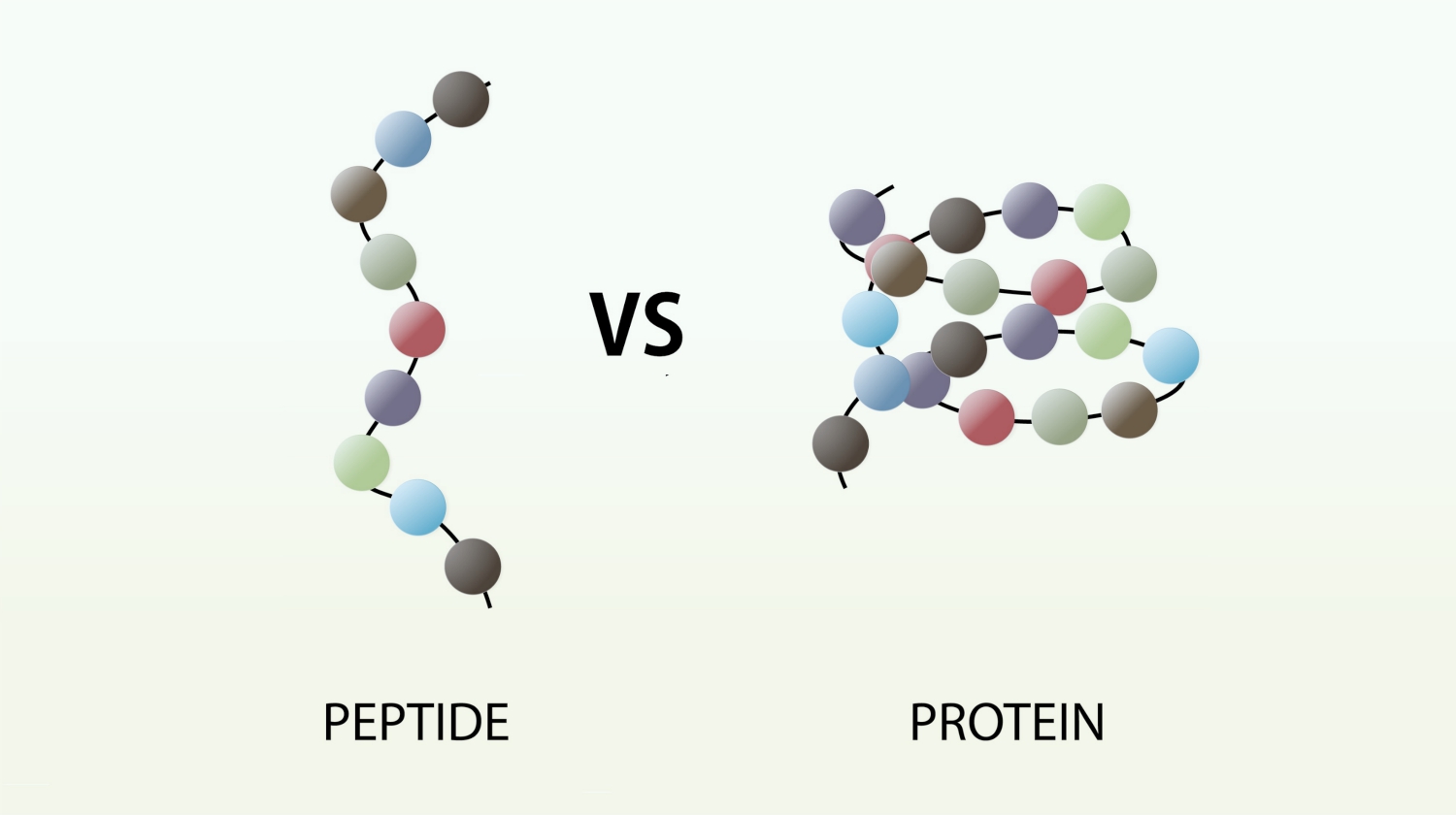
In molecular biology, peptide, polypeptide, and protein are related terms, but they do not mean the same thing. All three are built from amino acids, yet their size, structure, and biological behavior can differ greatly. Understanding peptides and polypeptides helps readers follow cell signaling, enzyme activity, tissue regulation, and peptide-based wellness topics.
Biological regulation depends on accurate communication between cells. Some signals travel through the blood, others work locally, and many are based on amino acid chains carrying specific information. The same building blocks can form small messengers, longer structural chains, or complete proteins.
For people comparing scientific articles, product pages, or supplement categories, it is useful to know what is the difference between peptides and polypeptides before going into details. Clear terminology helps avoid confusion when peptide, polypeptide, and protein appear together.
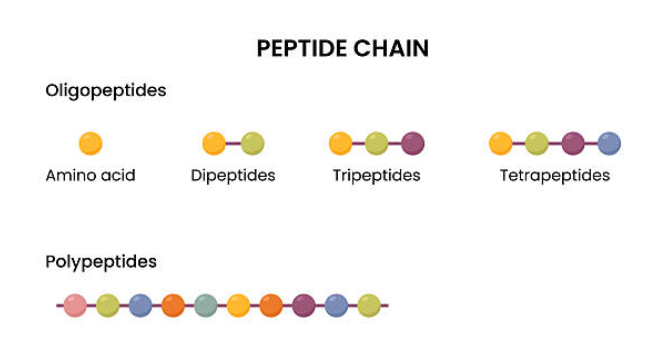 Peptides are short chains of amino acids connected by peptide bonds. They may contain two or three amino acids, or several dozen residues, depending on the context. Their small size does not make them unimportant, because short sequences can still be recognized by receptors and enzymes.
The phrase simple peptides and polypeptides is useful when discussing amino acid chains before focusing on complex protein structure. A dipeptide has two amino acids, a tripeptide has three, and longer peptides may participate in signaling. In many biological texts, peptides are described as shorter chains than polypeptides.
Polypeptides are longer amino acid chains formed by the same peptide bonds. They may remain flexible, fold into stable shapes, or become parts of larger proteins. A polypeptide is often discussed as a bridge between a short peptide and a mature protein.
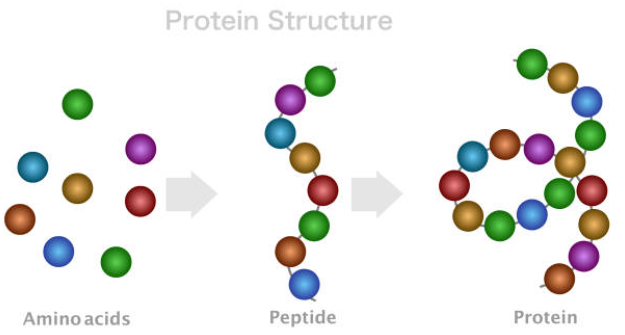
In practice, amino acids, peptides, and polypeptides form a continuous hierarchy. Amino acids are the units, peptides are shorter chains, and polypeptides are longer chains with greater folding potential. When polypeptide chains achieve a functional three-dimensional shape, they may be classified as proteins.
Peptides and polypeptides are molecules formed when amino acids are linked together by peptide bonds; the carboxyl group of one amino acid reacts with the amino group of another to form a chain with a specific sequence.
In cells, ribosomes translate messenger RNA into polypeptide chains. Many biologically active peptides are then generated from larger precursor proteins through post-translational processing, including proteolytic cleavage. Depending on their sequence and processing, the resulting products may function as peptides or fold into larger proteins.
There are many ways to categorize peptides and polypeptides, based on their structure, length, and role. For the sake of simplicity, we have summarized the most common criteria in a concise and comprehensive way.
The most common way to compare these molecules is by chain length. Peptides are usually shorter, while polypeptides are longer and more likely to become part of a protein. Many educational sources use about fifty amino acids as a practical dividing line, but the boundary is not universal.
That is why the difference between peptides and polypeptides should not be reduced to one number only. Length matters, but so do folding, stability, target, and final function. To distinguish between proteins, peptides, and polypeptides, it is better to look at the whole molecule and its role.
Peptides often have simpler structures. Some remain flexible, while others form short helices, turns, or compact shapes that help them bind to specific targets. Their activity may depend on a small but precise amino acid sequence.
Polypeptides have more potential for structural complexity. A longer chain can fold into secondary and tertiary structures, creating binding sites or catalytic regions. This organization is essential for receptors, enzymes, and transport proteins.
 Peptides frequently act as messengers in endocrine communication, nervous system signaling, immune modulation, appetite control, sleep-related pathways, and tissue response. Their effects often begin when they bind to a receptor.
Polypeptides can also be active, but they are often discussed as building blocks of proteins or as functional proteins themselves. Enzymes, antibodies, longer peptide hormones, and receptor components depend on polypeptide chains. This is why peptides, polypeptides, and proteins are chemically connected but functionally distinct.
The compounds made up of amino acids are the building blocks of all life, and so their role in regulating bodily functions is crucial. Peptides and polypeptides contribute to several biological processes in the human body. Let’s examine three main roles they play.
Peptides are widely known as signaling molecules. Many peptide hormones and neuropeptides transmit information between organs, glands, tissues, or nerve cells. Because they are relatively small, the body can produce, recognize, and degrade them with high precision.
A peptide signal may activate a receptor on the cell surface or start an intracellular cascade. In regulation, small sequences can create targeted effects when they fit the correct receptor. Readers interested in this field can review modern peptide products for general orientation.
Polypeptides often provide the physical framework for proteins that regulate the body. Enzymes, membrane channels, transporters, and receptors depend on folded polypeptide chains. Their shape determines what they can bind, transport, convert, or recognize.
A protein may contain one polypeptide chain or several chains working together. Once folded correctly, it can catalyze reactions, detect signals, or support cell structure. Without polypeptide architecture, many regulatory systems would lack the machinery needed to respond.
Peptides and polypeptides often work in the same network. A peptide messenger can bind to a receptor made from polypeptide chains. The receptor may then activate enzymes, ion channels, transport systems, or transcription factors.
Examples include:
These examples show that what is the difference between peptides and polypeptides is not only a definition question. In real biology, short chains often deliver messages, while longer chains help receive, process, or execute them.
Peptides usually act through selective binding. A receptor recognizes a specific amino acid sequence or shape, similar to a lock recognizing a key. After binding, the receptor may change shape and activate a signaling pathway inside the cell.
Some peptides act mainly at the cell membrane, while others may interact with intracellular targets depending on size, charge, stability, and transport. Their activity is also influenced by how quickly enzymes destroy them.
Polypeptides act through structure. A chain has to fold in just the right way to create active regions, binding surfaces, or catalytic sites. If the folding process is disrupted, then the actual final form of the molecule may not be one that possesses activity.
Studies into how peptides bioregulate will often focus on just why a short sequence might affect cells; getting a more general sense of peptide bioregulators and their mechanisms should show why we tie these four points of sequence, stability, dosage, and context together.
Peptides are important in medicine because many interact with specific biological targets. This makes them valuable for research in endocrinology, metabolism, immunology, dermatology, neurology, and regenerative science. Their selectivity is useful, but stability and delivery remain major considerations.
Scientific interest does not mean that every peptide product has the same evidence level or purpose. Formula quality, route of administration, dosage, and regulatory status all matter. Consumers should read product information carefully and consult a qualified professional when adding supplements to a health routine.
Polypeptides are also central to modern medicine. Therapeutic proteins, antibodies, enzymes, and biologics are based on folded polypeptide chains. These molecules may require advanced production and quality control to preserve structure and activity.
The close relationship between peptides and polypeptides explains why medical terminology can feel confusing. Some molecules are called peptides because they are short, while others are called proteins because they are larger and folded. Both can be relevant in drug development.
 Peptide research helps scientists study receptor binding, cell signaling, immune response, and tissue-specific communication. In wellness contexts, peptide-based supplements are usually positioned as products that support normal biological functions rather than as medicines.
For example, Epitide® is presented as a dietary supplement associated with epithalamin-related peptide formulation. Product information should be read carefully, especially when comparing ingredients, suggested use, and intended category.
Polypeptides are one of the most important products of biotechnology. Almost every recombinant protein, monoclonal antibody, enzyme product, and diagnostic reagent depends on accurately formulated chains of amino acids to function. In this case, their value lies largely in the predictable structure and specific actions.
Delivery format is another practical area. Peptide-related products may be developed for oral, topical, injectable, nasal, or sublingual use, depending on stability and purpose. As a finished format, Epitalon spray® shows how peptide-related formulations can be presented in a consumer-friendly way.
The easiest way to understand these terms is to start with amino acids. Amino acids join to form peptides; longer chains are called polypeptides, and folded functional chains may become proteins. This hierarchy helps readers compare peptides, polypeptides, and proteins without mixing their meanings.
Peptides are generally shorter and often act as signaling molecules. Polypeptides are longer, structurally more complex, and often form proteins or protein parts. The practical distinction depends on chain length, folding, target, function, and biological context.
For biology, the difference between peptides and polypeptides matters because regulation depends on both fast messages and stable molecular machinery. Peptides may deliver instructions, while polypeptides may form the receptors, enzymes, and structures that make those instructions possible.


Pineal Gland Function and Regulation of Melatonin Production
Read
Peptide Bioregulators and Circadian Rhythm Regulation in Aging
Read
Epithalamin vs Epitalon: What Is the Difference?
Read
Types of Peptides Explained: How Khavinson Peptide Bioregulators Differ from GLP-1, BPC-157, TB-500 and Other Peptides
Read
Epitalon Peptide Benefits for Sleep, Longevity, and Cellular Balance
Read
What Is Good for Eye Health and Vision?
Read


